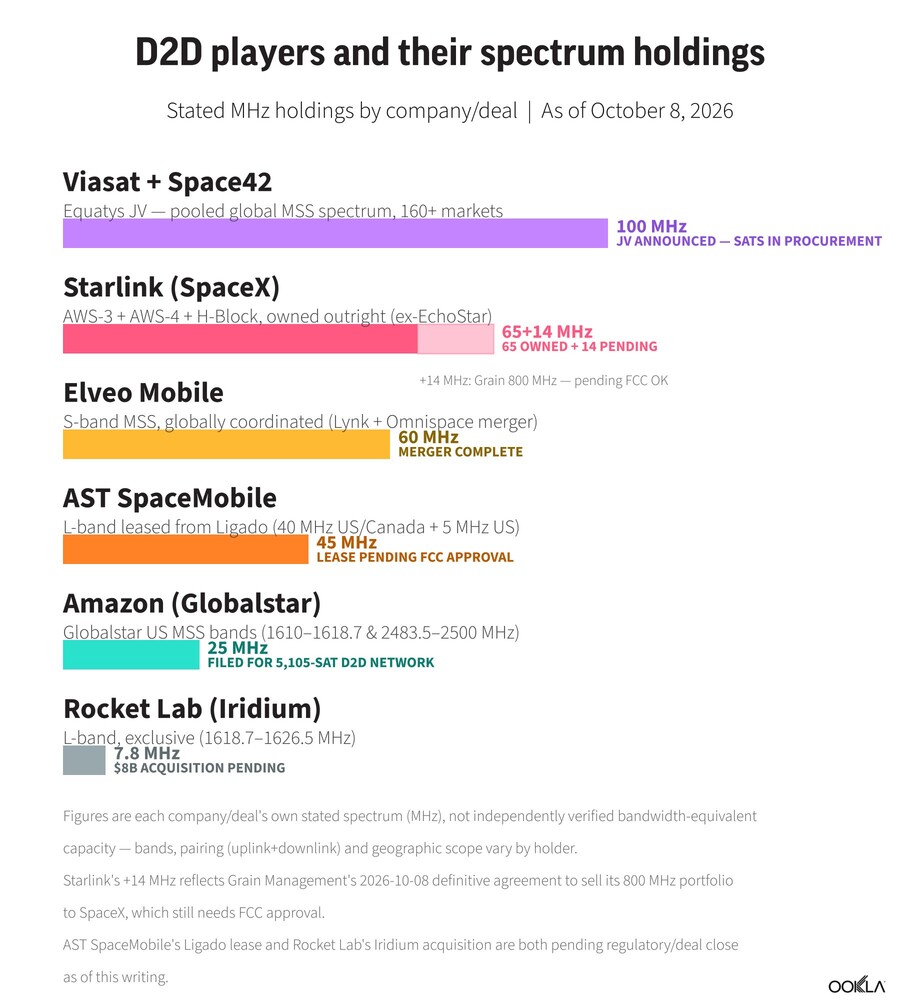
#665 Re: Invertir en el Sector Espacial: La última frontera Ver mensaje de ErickSpace369 Top 100 ErickSpace369 Seguir 09/10/26 16:33 Interesante el mercado D2D y sus frecuencias:https://x.com/mikeddano/status/2108309520137273771 El Conocimiento es Poder... Responder
#666 Re: Invertir en el Sector Espacial: La última frontera Ver mensaje de ErickSpace369 Top 100 ErickSpace369 Seguir 09/10/26 19:10 Amazon LEO esta cerca de llegar...https://arstechnica.com/space/2026/10/amazon-builds-1000th-satellite-is-weeks-away-from-space-internet-rollout/Y TeraWave también:https://x.com/blueorigin/status/2108205277921042675 El Conocimiento es Poder... Responder
 España